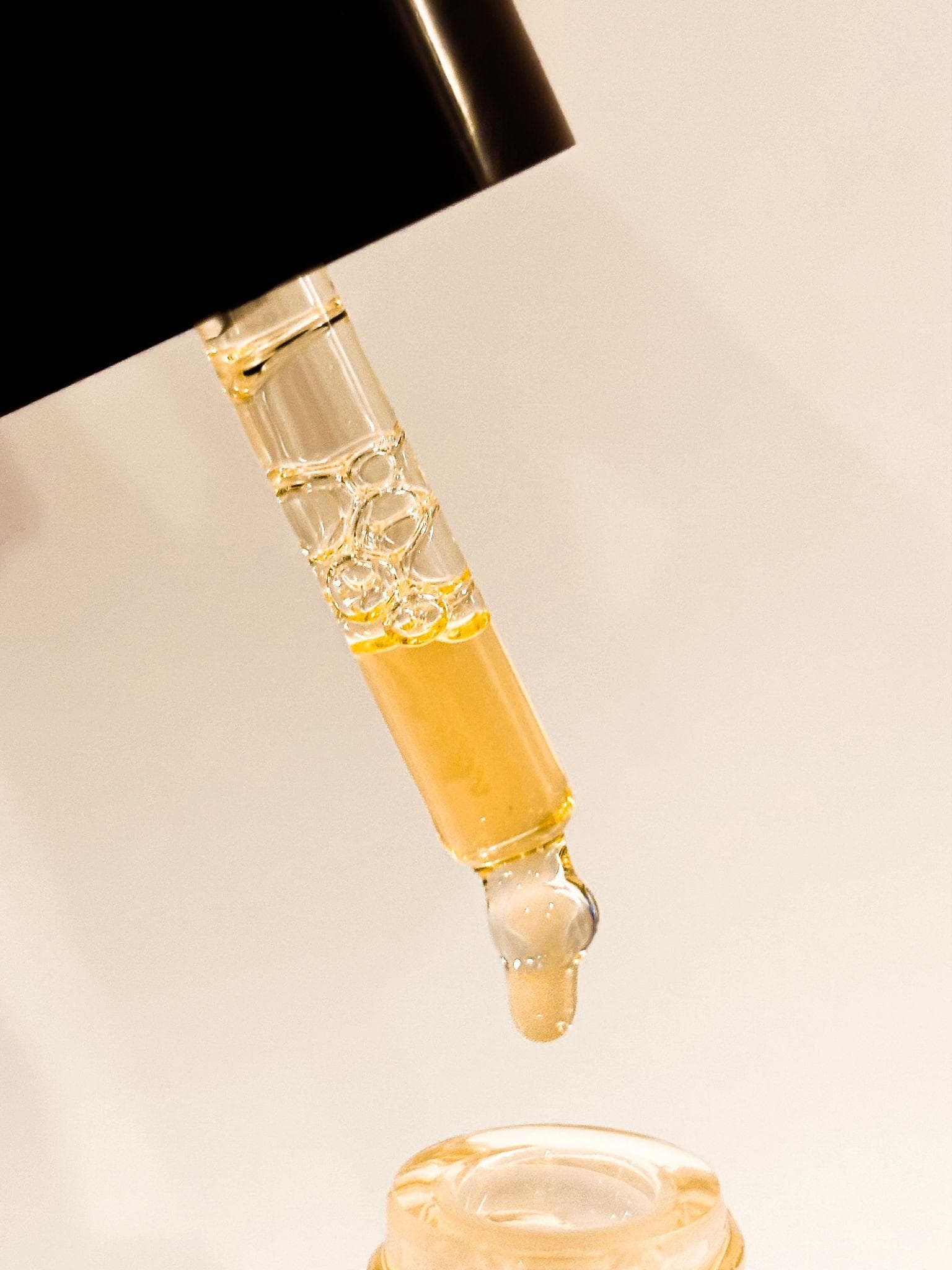
Skin biomimicry means drawing on the natural composition, organisation or functioning of the skin to design a skincare product. In cosmetics, this approach can notably guide the choice of a formula’s lipids and the way they are combined, with the aim of supporting the barrier function and skin comfort.
To understand this idea, we need to take a closer look at what protects our skin.
How does the skin barrier work?
The stratum corneum, at the surface of the epidermis, is made up of cells surrounded by a lipid matrix. Ceramides, cholesterol and free fatty acids are part of this matrix. Their presence and their organisation contribute to the protective properties of the skin.
The image of a wall is useful: the cells are its bricks, and the lipids provide the continuity between them. This structure helps limit the evaporation of water and maintain a separation between the body and its environment. Research on models of skin lipids shows that their molecular structure influences their organisation: formulation is therefore about more than adding a fashionable ingredient.
When skin becomes dry or uncomfortable, the question of care is not only about adding water. It is also about the ability to retain it.
What does a biomimetic product seek to reproduce?
Biomimicry can take several forms. An ingredient may be related to a component of the skin. A blend may be inspired by the skin’s lipids. A formulation may also seek an organisation close to certain biological structures.
These approaches have one thing in common: starting from the skin to design the product. They do not mean that a cosmetic fully reproduces the skin, that it replaces its functions or that its efficacy is automatic.
The term “biomimetic” describes an approach. To assess a product, it remains useful to look at its composition, its use, its tolerance and the tests carried out on the finished formula.
Hydrating and nourishing: two complementary gestures
Humectants, such as glycerin, help retain water in the upper layers of the skin. Emollients, including certain lipids, contribute to softness and suppleness. Depending on the formula, film-forming substances can also limit evaporation.
An oily or water-free serum can therefore have its place in a hydration routine, even if it does not itself provide an aqueous phase. Whether to pair it with a cream depends on the comfort you are looking for and on your skin.
A concrete example: if your skin feels tight after cleansing, adding more exfoliating products will not necessarily meet its need. Reconsidering how gentle your cleansing is, and the place of a nourishing product, may be more relevant.
L’Élixir: Feï’s biomimetic approach
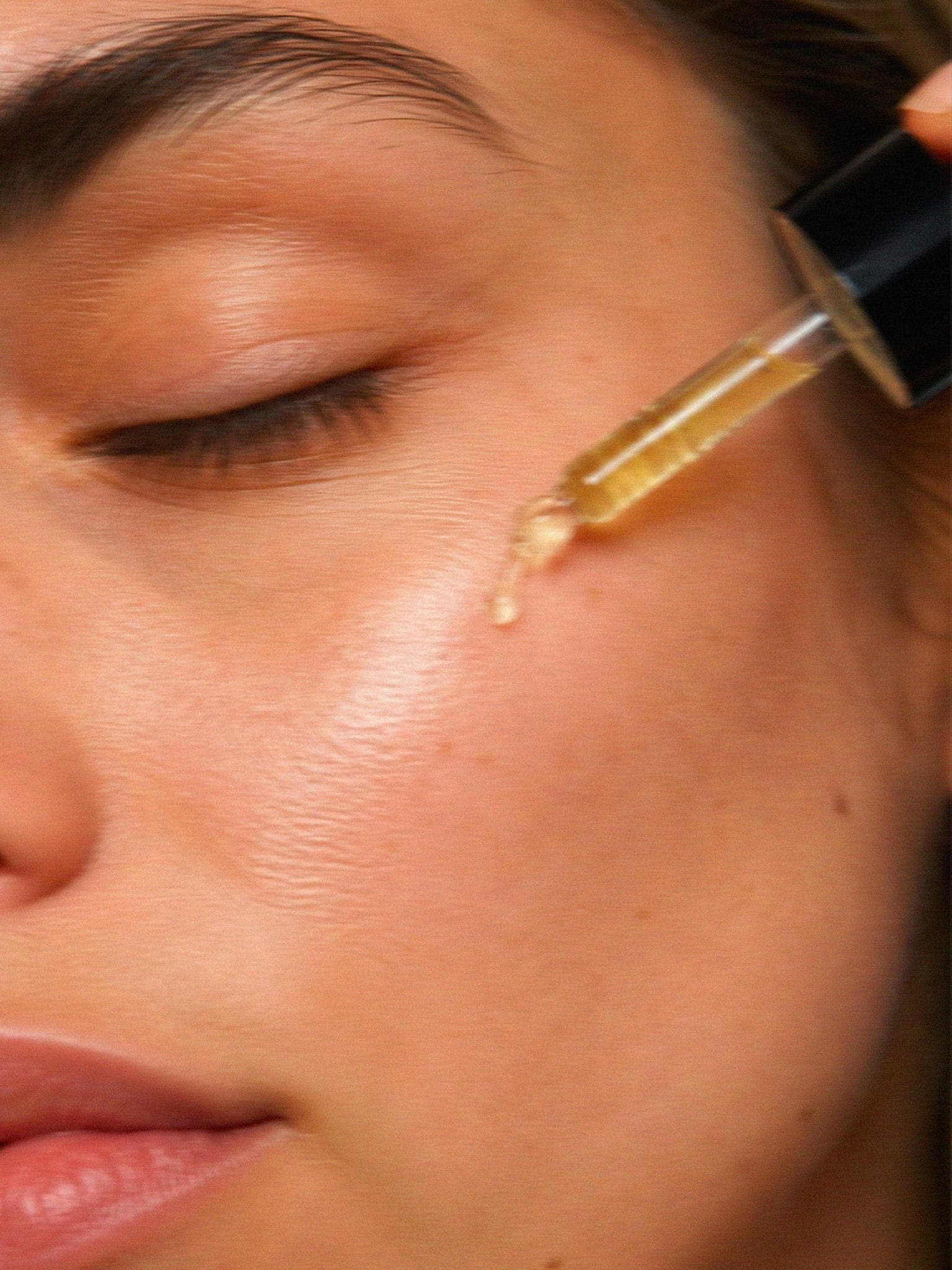
Feï presents L’Élixir as a biomimetic microbiotic serum. Its approach combines a lipid complex with ingredients such as squalane, moringa and desert date oils, a vitamin C derivative and a Lactobacillus ferment.
This formula is part of Cosmetics of the Living: considering care in relation to the skin ecosystem. The role of L’Élixir in the ritual is to provide nourishing care after cleansing and to support the suppleness and radiance of the skin.
The presence of a ferment calls for a clarification. An ingredient named “Lactobacillus ferment” does not, on its own, prove that live bacteria are present in the bottle. Likewise, “microbiotic” and “biomimetic” describe two different dimensions: one relates to the world of the microbiota, the other to inspiration drawn from the skin.
How do you fit L’Élixir into your routine?
Start by cleansing your face with L’Essentiel — Purification Ritual, working up its lather in the palm of your hand. Rinse, then pat dry gently.
Following Feï’s directions for use, then apply 3 to 5 drops of L’Élixir, morning and evening, on its own or before your usual skincare. Adjust your routine to your comfort and follow the instructions on the packaging. During the day, finish with suitable sun protection: the serum does not replace it.
For very reactive skin, introduce the product gradually and start with a small area. A persistent burning sensation or irritation is a reason to stop using the product.
The questions people ask
Is a biomimetic product necessarily natural?
The origin of an ingredient and its biomimetic character are two different matters. Biomimicry concerns its kinship with the living, or the way the formula draws inspiration from it.
Are ceramides probiotics?
Ceramides are lipids. Probiotics are live micro-organisms that meet precise criteria of benefit and quantity. They do not belong to the same family.
Does a biomimetic serum replace all other skincare?
It depends on your needs. Cleansing, nourishing the skin and sun protection serve complementary functions. A simple routine can combine them without needlessly multiplying the steps.